

Hello! It's Megumi (@meg_intheworld).
It’s been one year since I participated in a 10-day Vipassana meditation course in Lumbini, Nepal, in spring 2024.
Six months ago, I wrote a reflection and mentioned that meditation had become an essential part of my daily life. However, that feeling of “essentiality” has gradually changed over time.
Letting Go of the “Essential” Mindset
During the first month after completing the course—about 10 hours a day, totaling roughly 100 hours—meditation naturally became part of my routine, with 30 minutes to an hour in the mornings and evenings.
But after returning home, the days when I could meditate for an hour slowly decreased, and some days I could only manage 15 minutes.
Even though I wanted to continue, sometimes my motivation lagged, and at times I felt a sense of obligation creeping in, like “I have to do this.”
I scheduled two 30-minute meditation sessions daily, morning and evening, following reminders consistently. However, over time, this routine started to feel unnatural.
There were days I meditated out of obligation and ended up quitting after just five minutes.
By then, I had started to feel bound by the label I had put on it myself.
My previous belief that “meditation is like hydration — essential to prevent dehydration” remains, but unlike water, meditation isn’t directly life-saving.
Six months ago, I believed meditation was essential. But now, I feel constrained by the idea I had attached to it, so I decided to let go of that label and make it a personal choice to meditate or not. It felt more natural and healthier.
Being able to choose freely has made me want to meditate more spontaneously.
For example, “Today will be busy, so I’ll meditate now,” or, “I used my brain a lot today, so I’ll calm it down before bed.”
Ultimately, I feel that the most important thing is to observe my own state, whether I enter a meditative state or not.
Choosing a Comfortable Place
Those who have attended a Vipassana 10-day course know you cannot choose your seat.
You must sit in the assigned spot for all 10 days.
You are not allowed to move unless there is a strong reason, no matter who sits around you or if you don’t like the spot.
The course’s goal is to master Vipassana, so sitting at the same time and place daily is ideal for building a meditation habit.
However, I realized that this didn’t fit me in real life.
Compared to when I was traveling abroad more than 10 months a year, I now live a more settled life, so I could choose a fixed spot if I wanted.
But I found that, for someone like me who believe my intuition and subconscious senses, the place that feels “just right” changes depending on various factors.
For instance, the direction of the wind or surrounding sounds.
Of course, I could ignore those feelings and sit in the fixed spot, but I prefer following my gut, “this is the place” inside me.
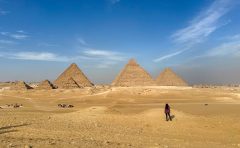
When traveling abroad, I often meditate on hotel beds due to safety concerns. But I did it front of the pyramids, on the Red Sea beach, along the Nile River, or inside temples when I visited Egypt because I felt that “this is the spot”.
The Synergy of Running and Meditation
The most comfortable and deep meditation sessions now for me is right after running 3 to 5 kilometers.
Sitting on the ground with eyes closed, listening to the wind and waves, is incredibly soothing.
One evening, after a day spent sitting for work hours, I felt pain and stiffness from my eyes to my shoulders.
However, after running 3 km, I noticed improved blood circulation and that the pain and headache naturally disappeared.
After stretching lightly where I could hear the waves, I decided to meditate there—and entered a deep meditation that lasted about 30 minutes.
It was a mysterious feeling as if all the day’s fatigue had vanished.
Since then, running and meditation have become a set for me.
Sometimes I don’t feel like running but want to meditate, so I run. Other times, I’ve been sitting all day and decide to run and then meditate.
This is just my hypothesis, but I believe running and meditation have an essential synergistic effect:
- Aerobic exercise like running releases endorphins, which lift mood and create positive feelings.
- After running, the parasympathetic nervous system becomes dominant, making it easier to relax body and mind.
- Meditating in this relaxed state reduces physical fatigue and muscle pain and lowers cortisol (stress hormone).
In short, running uplifts mood → running ends and body-mind relaxes → meditation follows, reducing fatigue and pain and leading to recovery → relaxation deepens meditation.
This is based on my personal experience, but it feels this way.
In fact, I discovered this running + meditation combo even before joining the Vipassana course. So I believe this style works for me best.
The 10-day Vipassana course was a deeply meaningful experience, and I want to join again someday. Yet, for now, I am happy to have returned to my original style.
My approach may evolve again in the future, and if so, I will share updates with you all.
If interested, past records of my Vipassana journey are available for reading.
2.Vipassana Meditation “10 Days Course” Report (DAY 0) (in Japanese)
3.Vipassana Meditation “10 Days Course” Report (DAY 1-2) (in Japanese)
4.Vipassana Meditation “10 Days Course” Report (DAY 3-4) (in Japanese)
5.Vipassana Meditation “10 Days Course” Report (DAY 5-6) (in Japanese)
6.Vipassana Meditation “10 Days Course” Report (DAY 7-8) (in Japanese)
7.Vipassana Meditation “10 Days Course” Report (DAY 9-10) (in Japanese)
8.Enjoy the Silence and Solitude : 5 Insights from Vipassana Meditation
9.Personal Raw Reflections for the future : Vipassana Meditation
10.Triangle Sisterhood at Vipassana Meditation
11.Six Months After 10 Days of Vipassana: What I’ve Learned
12.One Year After Completing a 10-Day Vipassana Meditation Course
※記事に関する質問・感想はコメント欄にお願いします。
※当サイトの画像・文章・コンテンツ内容の無断使用・改変・転載・出版を禁じます。
※記事の一部引用に関してはこちらを参照ください。
※サイトの運営費用を賄うためアフィリエイトリンク(広告)を掲載しています

Comment